Carollo Engineers

 
Sanitary Sewer Overflows
SSOs impact both public health and the environment.

Although the Clean Water Act states that no sanitary sewer overflows (SSOs) are allowed in a collection system or at a wastewater treatment plant, the U.S. EPA estimates that approximately 40,000 SSOs occur annually across the country. These SSOs can occur during dry weather and wet weather.


Significant SSOs can occur during wet weather periods when in filtration and inflow (I/I) exceeds the capacity of a conveyance system and/or treatment facility, even in properly-operated systems. Carollo Engineers has successfully assisted clients overcome SSO challenges for many years.
Regulations
The EPA's answer to SSOs is the capacity, management, operations, and maintenance (cMOM) program, along with other potential regulations. The purpose of cMOM is to set standards to properly manage, operate, and maintain all parts of the collection system. In doing so, a municipality must provide adequate capacity to convey base flows and peak flows, take all feasible steps to stop and mitigate the impact of SSOs, and provide notification to parties with a reasonable potential for exposure to pollutants associated with an overflow event. However, cMOM does not currently provide legal protection to a municipality if an overflow occurs.
Wet Weather Challenges
While SSOs cannot be eliminated in all situations, they can be managed. Most collection systems face the possibility of overflows either because of in-creased dry weather flow (growth), increased wet weather flow (deterioration), or a combination of the two. Meeting cMOM, managing overflows, and protecting the public and the environment from the consequences of SSOs requires more than a band-aid approach.
Comprehensive Approach
The challenge in addressing excess flows is the need to apply a comprehensive approach that includes accurate flow estimates, proven abatement technologies, and the experience to negotiate realistic permit limits that protect both the municipality and the environment. Carollo is experienced in tackling these challenges and helping clients develop and implement integrated wet weather management programs.
Estimating Design Flows
The first step in managing SSOs is to determine the extent of the wet weather problem. This entails extensive analysis of the sewer system with technologies such as flow monitoring, modeling, geographic information systems (GIS), and maintenance management systems. Carollo currently applies state-of-the-art , computerized programs to cost-effectively evaluate the condition and performance of a sewer system. We apply both design storm and long-term modeling approaches. Long-term continuous simulation techniques allow us to take into consideration antecedent conditions, back-to-back storms, and high groundwater conditions that dramatically affect the response of SSOs.
Methods for SSO Management
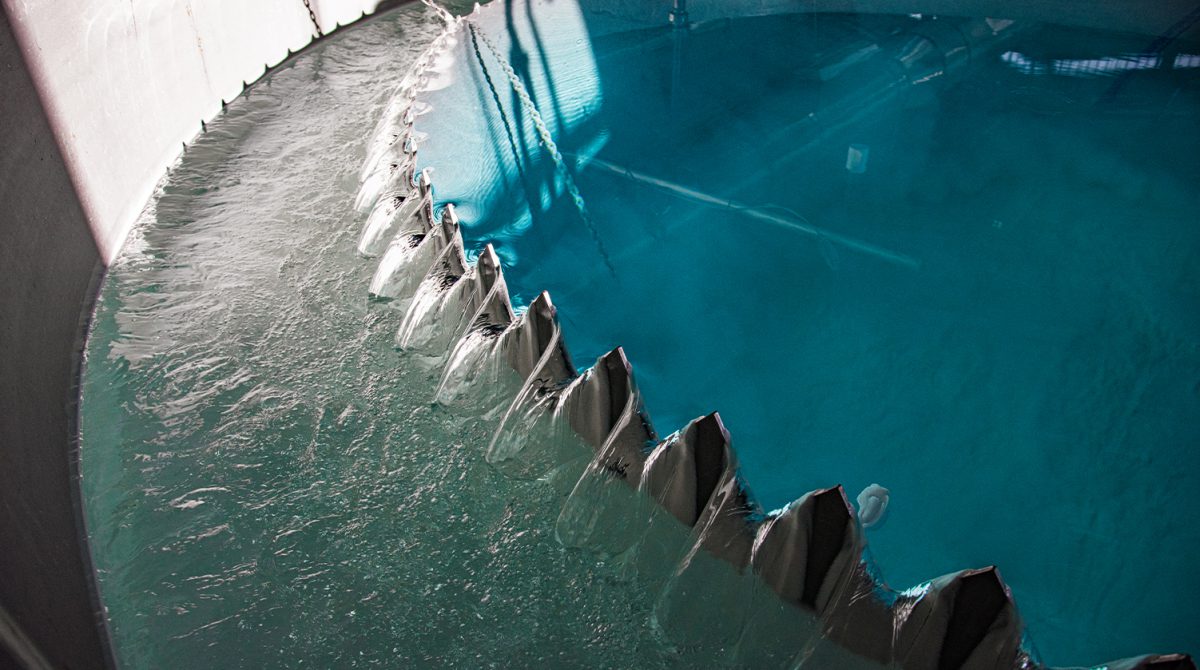
Wet weather flows are typically controlled by conventional technologies such as I/I reduction, conveyance improvements, storage, and secondary treatment at a wastewater treatment plant. New technologies are also available that provide high-rate treatment of SSOs to advanced primary levels. Ballasted flocculation is one of the most promising high-rate treatment technologies today. Ballasted flocculation can be used in combination with storage facilities or the discharge can be blended with secondary effluent to meet discharge standards.
Permitting Issues
Even with significant capital improvements, a municipality is still at risk if their SSO abatement program is not integrated into their wet weather permit. Carollo assists clients in negotiating National Pollutant Discharge Elimination System (NPDES) permits that protect against wet weather water quality violations by defining appropriate design events, and in writing permits to include the performance objectives of the proposed cost-effective abatement facilities. These “performance-level” permits allow clients to meet discharge requirements by operating the proposed facilities as designated by the permit.
Experience Counts
Carollo applies this integrated SSO management approach to fit the needs of a variety of clients. We know each situation is different and our engineers utilize selected techniques to manage SSOs in diverse climates across the country. Recent experience includes:
Vallejo Sanitation and Flood Control District, California - SSO Elimination Program
The Vallejo Sanitation and Flood Control District (VSFCD) collection system has suffered from extensive wet weather infiltration and resulting permit violations. Carollo assisted VSFCD with the implementation of an SSO Elimination Program. This program included flow/water quality monitoring and extensive modeling of the wastewater collection system, the wastewater treatment plant, the urban storm water system, and the Napa River watershed. Models included EPA SWMM and MOUSE by DHI. Carollo used long-term simulation techniques to set a design overflow event frequency and applied optimization and risk analysis to develop alternatives for selected design discharge events. Alternatives included storage basins, conveyance improvements, I/I reduction measures, and treatment plant improvements such as high-rate treatment systems (i.e. ballasted flocculation).

Carollo's services include developing a capital improvement program (CIP), cost estimating, permitting for dry and wet weather discharges, assisting with the Environmental Impact Report (EIR), providing program management for the $80 million CIP on an aggressive five-year schedule, and design and construction oversight of treatment plant upgrades, conveyance improvements, and a 3-million-gallon storage facility. Project elements also include conducting a pilot program to establish I/I rehabilitation effectiveness, applying additional modeling to identify conveyance deficiencies and optimization techniques for new cost-effective SSO abatement projects, and assisting with securing additional funding through State Revolving Fund loans and alternate funding sources.
Livermore-Amador Valley Water Management Agency, California - Integrated Wet Weather Management Program
The Livermore-Amador Valley Water Management Agency (LAVWMA) and its member agencies man-age a system that consists of two treatment plants, three collection systems, an export pump station and force main, and 50 million gallons of storage facilities. Spurred by significant growth, LAVWMA hired Carollo to complete an integrated wet weather management program that included monitoring and modeling of the wastewater disposal system using state-of-the-art continuous simulation models to assess the impact of additional flows on its facilities. A coordinated engineering effort for the EIR process along with watershed planning allowed for a wet weather NPDES discharge permit that saved LAVWMA millions of dollars in additional facilities.

Ballasted flocculation provides cost-effective treatment of wet weather flows applicable to both SSO and combined sewer overflow (CSO) systems.
 
Have questions about water treatment? Contact us today.
Sign In