The use of ultraviolet (UV) light is on the rise as the preferred disinfection choice for wastewater treatment, water treatment, and recycled water. The increased interest in this technology is largely due to:
• Safety concerns related to other disinfectants.
• The desire to reduce disinfection byproducts (Dips).
• Advances in UV technologies leading to increased disinfection efficiency and lower capital and operation and maintenance (O&M) costs.
The rapid increase in the potential application of UV has led to an increase in the number of manufacturers and types of technologies. Proper UV planning and design requires a thorough understanding of each UV manufacturer and associated technology. At Carollo Engineers, we are researching the applicability of UV for various clients using state-ofthe-art, bench-top equipment, and are concurrently working with various UV manufacturers to test the performance of their systems.
A Wide Range of Services
Carollo offers a range of experience related to water quality analysis for UV planning and design, as well as expertise in detailed UV equipment validation.
Our services include:
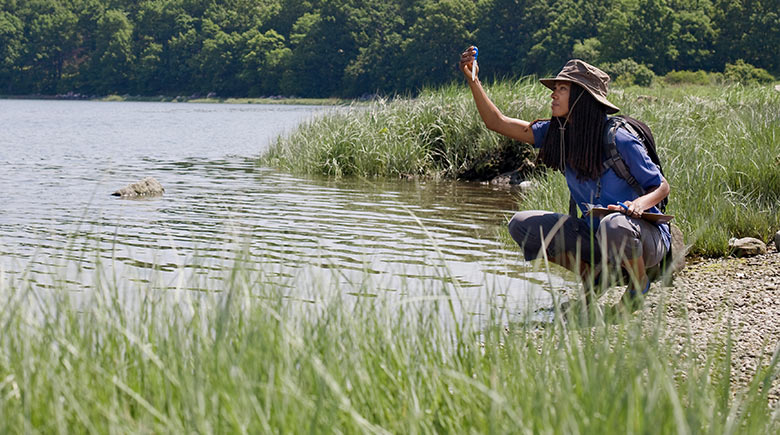
• Bench-top analysis of water quality, including total suspended solids (TSS), turbidity, particle size distribution (PSD), and ultraviolet light transmittance (UVT).
• Collimated-beam UV testing for dose determination to meet a client-specific disinfection target.
• Pilot and full-scale UV system biological and hydraulic analysis.
• Performance analysis of various UV lamps.
• Performance analysis of various UV lamp sleeve cleaning systems.
UV Research Team Experience
Our engineers have worked on UV equipment validation projects in the United States and abroad. This experience, combined with site-specific water quality testing, provides a solid and cost-effective basis for UV planning and design. We have a thorough understanding of a variety of UV technologies, including:
Reactor Validation and Operation Optimization – Through a joint collaboration between the New York State Energy Research and Development Authority (NYSERDA) and the American Water Works Association Research Foundation (AwwaRF), Carollo is investigating the optimization of UV reactor validation and reactor operations. Work includes evaluating lamps, ballasts, lamp sleeves, and other issues crucial to UV performance using a number of different lamp technologies from various UV manufacturers.
Low-Pressure Technologies – Carollo completed the validation of Trojan’s low-pressure (LP) UV system for approval under the National Water Research Institute (NWRI)/AwwaRF UV guidelines. Testing included biological and hydraulic analysis. Carollo is also working with Trojan to analyze LP lamp aging data.
Low-Pressure, High-Output Technologies – Carollo completed the validation of Trojan’s low-pressure, high-output (LPHO) lamp sleeve cleaning and lamp aging performance and investigated the latest Trojan LPHO reactor. Carollo also completed the validation of the latest WEDECO LPHO reactor, examining disinfection and hydraulic performance, sleeve fouling, and lamp aging. Carollo performed all testing in accordance with the NWRI/AwwaRF UV guidelines. In another equally critical project, WEDECO partnered with Carollo to develop the first North American UV validation facility for drinking water UV treatment. Work included validating the performance of WEDECO’s LPHO drinking water UV system.
Medium-Pressure Technologies – Carollo completed the validation of Trojan’s medium pressure (MP) UV system for approval under the NWRI/AwwaRF UV guidelines. The analysis included the evaluation of disinfection efficiency, hydraulic behavior, cleaning system effectiveness, and lamp output degradation. Calgon Carbon also partnered with Carollo (and WEDECO, see above) to develop the first North American UV validation facility for drinking water UV treatment. Work included validating the performance of Calgon’s MP drinking water UV systems.
Application of Research to Design – In addition to the experience detailed above, Carollo’s team of UV experts has worked closely with other key UV manufacturers on various projects ranging from research to planning and design. We use this first-hand performance knowledge of various UV technologies, as well as our thorough understanding of water quality requirements to accurately size and design site-specific UV systems for our clients.
Examples of projects include:
City of Roseville, California – As part of the City of Roseville’s conversion from chlorine gas to UV for wastewater reuse disinfection, Carollo took filtered effluent water samples and evaluated them for UVT, PSD, and turbidity. The Carollo team then went one step further and performed a number of bench-top, collimated-beam UV tests to determine if UV was an effective tool for total coliform reduction. The results indicated little interference of particles with UV disinfection, making UV an efficient disinfection choice. This research resulted in the design of a cost-efficient 45-mgd reclamation system.
City of Springfield, Missouri – To assist the City of Springfield convert their wastewater disinfection system from chlorine gas to UV, Carollo’s team also took water samples and evaluated them for UVT, PSD, and turbidity. This analysis included bench-top, collimated-beam testing to determine if UV was an effective tool for fecal coliform reduction. The results again indicated little interference of particles with UV disinfection, confirming UV as Springfield’s disinfection choice.
City of Watsonville, California – Carollo's design team examined Watsonville water quality, laid out an effective pretreatment scheme, and used the UV research data for a performance and cost-effective UV design.
Fountain Hill Sanitary District, Arizona – Concern over high-sleeve fouling potential led to UV piloting at this site. The pilot data allowed the design team to optimize O&M strategies to get the most dose out of their UV design at a reasonable capital and O&M cost.