Lights, Camera, Enhanced Coagulation - A Solution for Meeting Multiple Treatment Goals
By Lina Boulos, P.E.(Pasadena), Ron Joost, P.E.(Phoenix), and Gil Crozes, Ph.D.(Boise)
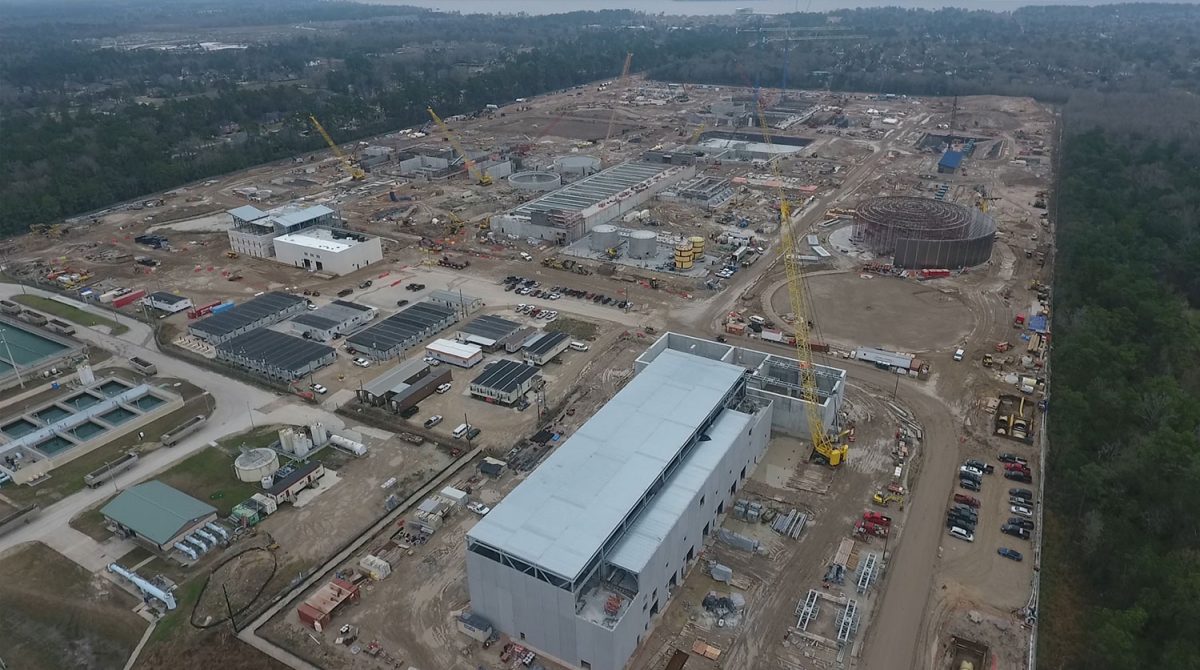
The Los Angeles Aqueduct Filtration Plant (LAAFP) is one of the largest water treatment plants in Southern California. Owned and operated by the LADWP, its unique design, innovative treatment filtration processes, and compact footprint can treat 600 million gallons per day, serving nearly four million people in the City of Los Angeles and surrounding areas.
Mulholland Drive
Beginning with its construction in 1913, under the leadership of William Mullholland, the municipal Water Bureau’s chief engineer, the City’s major source of water has been the Los Angeles Aqueduct (LAA), which originates in the Eastern Sierras. A second Los Angeles Aqueduct was completed in 1970, drawing water from the Haiwee Reservoir in Inyo County. Together, these two branches of the LAA supply approximately 70 percent of LADWP’s total water supply. As Los Angeles has continued to expand, water availability and quality has become a growing concern for the LADWP. This has been compounded by the fact that the LAA water contains high concentrations of naturally occurring arsenic, originating mostly from Hot Creek, a tributary to the LAA.
Adaptation
Since the mid 1990s, the LADWP has increasingly depended on another surface water source: water from the West Branch of the State Water Project, purchased from the Metropolitan Water District of Southern California (MWD). This shift in source of supply is due to increased use of LAA water for environmental mitigation measures in the watershed, which means less water for City consumption. Today, the West Branch water makes up the majority of the LAAFP feed water, and more than 50 percent of LADWP water is purchased from MWD.
In a parallel effort to supplement current water supplies, the LADWP has entered into talks with the California Department of Water Resources to construct, operate, and maintain a water service turnout from the East Branch of the State Water project. Unlike the West Branch water, which undergoes a long period of settling in a series of two major reservoirs (Pyramid Lake and Castaic Lake), the East Branch water is conveyed directly from the California Aqueduct, and is higher in turbidity, nutrients, and organic matter. Both the West Branch and the East Branch waters are high in bromide, a precursor to the undesirable and regulated bromate contaminant formed upon ozonation.
City Heat
Emerging regulatory issues are currently challenging the LAAFP. With the LAA water high in arsenic, and the State Water Project waters high in bromide, organics, and turbidity, the treatment at LAAFP must be robust. Since 1995, to reduce contaminant load impact on LAAFP operations, the LADWP has been running full-time chemical treatment at Cottonwood Treatment Plant, located directly upstream of North Haiwee Reservoir, along the LAA. Currently, flocculated water settles in North and South Haiwee Reservoirs. This chemical addition system removes approximately 70 percent of the arsenic, as well as other undesirable constituents, such as phosphorus. However, the current chemical application at Cottonwood is considered interim. With the possibility of ceasing the operations at Cottonwood, a potentially challenging new water source feeding LAAFP, and emerging regulations, the current treatment process at LAAFP is being challenged and may no longer meet future performance goals. Also, to better manage operations and treatment residuals, LADWP is interested in centralizing treatment at the LAAFP.
LA Story
To address issues challenging the LAAFP operations, the team of Metcalf & Eddy/Carollo Engineers (M&E/Carollo) was hired in 2003 to investigate enhanced coagulation (EC) at LAAFP. Preliminary studies had shown that EC had the best chance of reducing total organic compounds in LAA water by 50%. Carollo led the first task of this project, which consisted of running bench- and pilot-scale testing of several EC technologies over a 13-month period. Several chemicals, experimental conditions, and EC technologies were tested.
Technology Challenge
To address future requirements of DHS, the technologies were challenged by running the test at extreme loading rates. For example, the one EC technology was tested at a loading rate of up to 60 gpm/sq-ft. Until that point, this treatment process had never been tested beyond 40 gpm/sq-ft. Similarly, the filters were operated at filter rates of up to 16 gpm/sq-ft. Conventional granular media filters are operated at rates ranging from 3 to 9 gpm/sq-ft.
The Solution
A First at the Designed High Capacity and Loading Rate. One EC technology was selected for further preliminary design: micro-sand enhanced settling (MES), also known commercially as Actiflo®. This technology was capable of meeting all of the LADWP’s goals, while preserving its compact footprint at high-filtration rates. Goals met include: meeting arsenic limits, decreasing halogenated disinfection byproduct formation, limiting bromate formation, meeting turbidity goals, and limiting the potential for algae growth.
The Future
The team of M&E/Carollo is currently performing preliminary design services for MES and solids management facilities. If approved, the project will go on to full design and construction. With EC, LAAFP will continue meeting present and future internal and regulatory goals, while preserving its state-of-the-art highrate design and compact footprint.
Back